


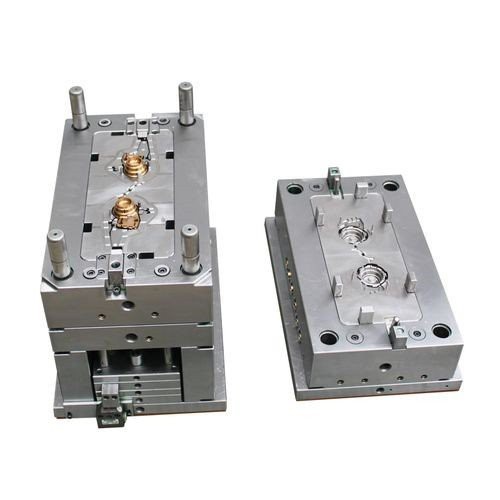

Over Molding Molds
In China, overmolding is also known as 2-pass injection molding. When compared to third-party material bonding, the over-molding technique is faster and less expensive, and it is extensively utilized in plastic design.
- Fast Delievery
- Quality Assurance
- 24/7 Customer Service
Product Introduction
What is over-molding?
In China, overmolding is also known as 2-pass injection molding. When compared to third-party material bonding, the over-molding technique is faster and less expensive, and it is extensively utilized in plastic design.
Types of over-molding
Over-molding can be divided into 3 types: insert molding, two-shot molding, and co-injection molding.
Insert molding. Most commonly used to mold soft elastomers into rigid plastics, insert molding is the most economical way to overmold. In the insert design, the hard segment has been pre-separated into a tool and then the soft material is ejected into it.
Elastomers can be bonded by mechanical locking, chemical and other methods. To achieve chemical bonding, the elastomer must have enough heat to melt the surface of the hard segment to achieve chemical bonding.
Two over-molding. This over-molding process requires two injection molding machines. The hard segment is injected first and then led by the elastomer mold to the injection molding machine to complete the injection of the hard segment into the elastomer. The hot base material is usually in a semi-solid, gel state. These molds allow the design and shaping of the lateral projection of the hard segment onto the substrate. This allows for a stable mechanical bond.
Co-injection molding. In co-injection molding, although the hard substrate and elastomer are injected into the same mold, compatibility between the materials is critical and it must be carefully controlled.
Co-injection molding is very expensive and difficult to control; it is the least used compared to the other two methods. However, because the hard substrate and the soft substrate elastomer are in a completely molten state, it provides the best bond between the soft and hard parts and the best quality of the molded part.


