


Compression Molding
Compression molding is a method of molding in which the molding material, generally preheated, is first placed in an open, heated mold cavity. The mold is closed with a top force or plug member, pressure is applied to force the material into contact with all mold areas, while heat and pressure are maintained until the molding material has cured; this process is known as compression molding method and in case of rubber it is also known as 'Vulcanisation'. The process employs thermosetting resins in a partially cured stage, either in the form of granules, putty-like masses, or preforms.
- Fast Delievery
- Quality Assurance
- 24/7 Customer Service
Product Introduction
B-F Mold Technology Co., Ltd is a group of professional plastic mould engineering and manufacturing companies, providing excellent solutions for various industries, and taking innovation, expertise and quality control as the backbone of our business core and provide our customers with a comprehensive end-to-end service for any product, engineering or manufacturing need. The company was established in 2010 and grown up to a medium mold making company with 95 employees and a 4500 square meters tool building shop .The average mold design and building experience of our designer and mold maker isover 10 years. Automotive interior and exterior trim, medical mold, home plastic, cosmetic mold, compression mold.
Why Choose Us
Our Factory
The company was established in 2010 and grown up to a medium mold making company with 95 employees and a 4500 square meters tool building shop .The average mold design and building experience of our designer and mold maker isover 10 years.
Our Product
Automotive interior and exterior trim, medical mold, home plastic, cosmetic mold, compression mold, Product Application, Injection mold & molding, Overmold & 2K Mold, IML Molds(In-Mold Label), Cube Molds, Stack Mold (T Molds), Insert Tooling, Rubber/ Slicon mould, Compression molds baby plastic molds.
Our Service
We provide excellent solutions for various industries, and taking innovation, expertise and quality control as the backbone of our business core and provide our customers with a comprehensive end-to-end service for any product, engineering or manufacturing need.
Our Certificate
GB/ T9001:2016,ISO 9001:2015, ISO9001.
Related Product

High standards come with high expectations. Thanks to thorough quality assurance, we have the ability to meet your requirements and exceed your expectations.

DSI (Slip Mold Injection) is an injection molded monolithic material that allows for faster molding and more exact complex structures, including sinks.

The core of the mold rotates in 90 steps, allowing multiple production steps to be performed simultaneously. The high variability of this process provides higher manufacturing performance with significantly shorter cycle times.

2K And 3K Molds Or Double And Triple Shot Tools
We develop injection molds and injection molded products for the production of plastic products consisting of multiple components. Using Mold flow simulation, the composite of parts is analyzed in advance.

In most cases, thermoplastic polyvinyl chloride (PVC) tubing is manufactured by injection or pressure molding, using the area of the pipe, or by machining from profiled sheets. Injection molding is used to manufacture tubing up to 12 inches wide, while tubing larger than 12 inches is typically manufactured from pipe sections.
In China, overmolding is also known as 2-pass injection molding. When compared to third-party material bonding, the over-molding technique is faster and less expensive, and it is extensively utilized in plastic design.
To quickly and efficiently give yourself the best chance of prototyping success, you need a proven and tested silicone that you can trust to provide accurate design dimensions.

Stack molding is really any process that uses multiple mold surfaces to make two or more parts in rapid succession. While a traditional single-part mold uses two molding surfaces to make one part, a stacked mold may use three molds to make two parts, or stack more parts in a single production cycle. The number of molds depends on the size and complexity of the finished product.

IML gives product manufacturers the ability to have multiple colors, graphic effects and/or textures when the part comes out the mold.
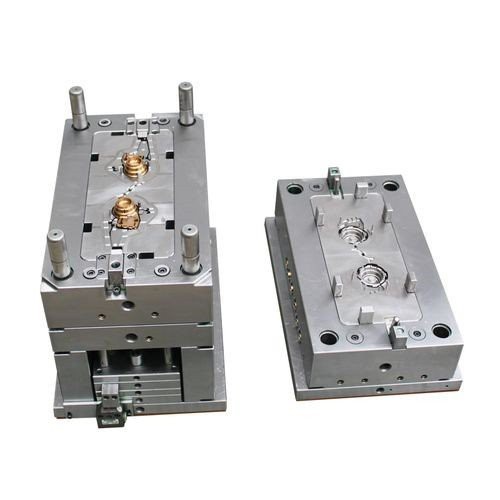
Compression molding is a method of molding in which the molding material, generally preheated, is first placed in an open, heated mold cavity. The mold is closed with a top force or plug member, pressure is applied to force the material into contact with all mold areas, while heat and pressure are maintained until the molding material has cured; this process is known as compression molding method and in case of rubber it is also known as 'Vulcanisation'. The process employs thermosetting resins in a partially cured stage, either in the form of granules, putty-like masses, or preforms. Compression molding is a high-volume, high-pressure method suitable for molding complex, high-strength fiberglass reinforcements. Advanced composite thermoplastics can also be compression molded with unidirectional tapes, woven fabrics, randomly oriented fiber mat or chopped strand. The advantage of compression molding is its ability to mold large, fairly intricate parts.
Advantages of Compression Molding
Cost-effective
Compression molding is often the most cost-effective manufacturing method if you need to produce simple, mostly flat, large parts. Some curves and pockets in designs are acceptable, but extreme angles and deep draws can be challenging to achieve through compression molding. Due to the lower pressures, tooling costs are affordable, and molds typically last a long time without warping or needing to be replaced. To offset the cost associated with compression molding's long cycle times, manufacturers can use a mold with multiple cavities to produce multiple parts in the same cycle.
Produces Strong Parts
Compression molding produces solid parts that are free of flow and knit lines. The structural stability of compression molded parts is very high. Compression molding is also used to manufacture parts using composite materials, which means that durable, corrosion-resistant parts and products can be produced easily through this method.
Flexibility In Design
Compression molding is also a great manufacturing tool for engineers and product developers. For example, prototyping can be done using low-cost compression molding. Simple compression molds can be designed in computer-aided design (CAD) software, 3D printed, and then used to form various types of materials with a simple tabletop vise. You'll find an example of how OXO does prototyping this later on in this article.
Excellent Surface Finish
The process results in components with a high-quality surface finish, making them visually appealing and suitable for various end applications.
Minimal Wastage
Compared to other moulding methods, compression molding generates relatively small amounts of waste material, contributing to cost-efficiency and sustainable production.
Low Initial Setup Cost
The setup cost for compression molding is relatively low, making it an attractive option for small to medium-scale production runs.
Types of Compression Molding
Industrial hydraulic compression molding
Large industrial compression molding machines are ideal for commercial large-batch part production. They employ hydraulic lift systems that make it possible to attain a high level of pressure to manufacture and produce large, uniform parts. Workers have full control and monitoring over the process from a separate control panel.
Benchtop presses
Smaller benchtop compression machines are best to manufacture small to midsize parts. Benchtop presses usually take up less space compared to large industrial compression machines but is best for large runs. They have multiple access points that give engineers and operators the flexibility to easily remove finished parts and the produced flash. Also, the smaller size and footprint make it ideal to employ these machines in smaller production facilities or warehouses.
Cold (Heatless) Compression Molding
This technology is usually done by using heat but on the other hand, there is also cold (heatless) compression where the charge or raw materials are generally preheated before being put into the mold. For softer plastics, even heating is not needed. The engineers and manufacturers can control the procedure and curing and also shorten the production cycles by the timely introduction of heat.
Wet compression molding
The technique of wet compression molding is used to combine epoxies, resins and many other liquids with solid fabrics. Wet compression machines are very common in the production lines of car manufacturers like bmw where they produce strong and durable products in less time and low cost.
Create Molds
Tooling can be produced in a number of ways, including machining, die casting, 3D printing.
Set Up The Machine
Depending on the specific machine or device you're using, this may include cleaning the mold, turning on the heat, and other set-up processes.
Prepare Charge
Selected the type of material you want to use and determine the proper amount of material. If your charge is too big, excess material will seep out of the mold and result in flash that you will need to manually cut off.
Insert Charge
Place the charge in the center of the bottom mold.
Compress part
Close the top mold, apply pressure, and wait for your piece to form. Many manufacturers also use heat during the compression process, which softens the raw materials and can help speed up production.
Release part
Remove the finished piece.
Clean part
Resin flash around the edges must be manually cut off or removed, and the part may need to be cleaned before the final assembly.
What Are the Materials Used in Compression Molding?
Epoxy
Epoxy resins are popular in compression molding due to their excellent mechanical properties, high heat resistance, and dimensional stability. They flow easily when melted, ensuring complete cavity filling during compression. The cured epoxy parts exhibit high strength and durability, making them ideal for applications requiring robust molded components, such as aerospace parts, electrical insulation, and structural composites.
Silicone
Silicone materials are well-suited for compression molding because of their exceptional temperature resistance, flexibility, and excellent electrical insulation properties. They can maintain their physical properties across a wide temperature range. Silicone material can easily flow and conform to intricate mold cavities, allowing for the production of precision seals, gaskets, medical devices, and automotive components.
Melamine
Melamine resins offer outstanding heat resistance, hardness, and chemical resistance, making them suitable for compression molding. Melamine molds easily and produces finished parts with excellent surface finishes and dimensional stability. Melamine is commonly used in compression molding for manufacturing kitchenware, decorative laminates, electrical components, and heat-resistant utensils.
Urethane
Urethane, or polyurethane, materials are favored in compression molding for their exceptional toughness, abrasion resistance, and impact strength. They can be formulated to exhibit a wide range of physical properties, making them versatile for various applications. Urethane flows well during compression molding, allowing for intricate mold designs and the production of items such as automotive parts, rollers, wheels, and industrial seals.
High-Density Polyethylene (HDPE)
HDPE is a thermoplastic material known for its high strength, chemical resistance, and rigidity. It can be easily melted and flows readily during compression molding, filling complex mold cavities with precision. High-density polyethylene parts exhibit excellent impact resistance and dimensional stability. Compression molding is commonly used for manufacturing products such as automotive components and industrial parts.
Polyphenylene Sulfide (PPS)
PPS is a high-performance thermoplastic with exceptional chemical resistance, flame retardancy, and dimensional stability. It has good flow characteristics when melted, ensuring complete cavity filling during compression molding. PPS parts exhibit high strength and stiffness, making them suitable for demanding applications in electrical components, automotive parts, and industrial equipment.
Polytetrafluoroethylene (PTFE)
PTFE is a non-stick fluoropolymer with exceptional chemical resistance and high-temperature stability. PTFE has a low coefficient of friction and excellent electrical insulation properties. It can flow easily during compression molding, allowing for the production of complex shapes and precise parts like gaskets, seals, bearings, and electrical insulation components.
Compression Molding Industries and Applications
Aerospace compression molding
Aircraft manufacturers are replacing heavier aluminum parts with compression-molded c-channels, h-beams, u-sections, l-stringers, and t-strings. Aerospace compression molding is also used to produce o-rings.
Automotive compression molding
The automotive industry uses compression molding to produce fenders and large vehicle panels. Compression-molded plastic parts are also used in automotive interiors to protect engine components. Related applications include housings for led lighting.
Medical compression molding
Medical compression molding is used to produce plastic syringe stoppers and silicone respirator masks. Because this molding process is cost-effective at low volumes, it can also be used to produce dentures for individual patients.
Compression molding for consumer products
Compression molding for consumer products is used to produce kitchenware such as utensils, boots, scuba gear, and appliance housings. Household electrical components such as sockets, switches, faceplates, and metering devices are also compression molded.
An Overview of the Compression Molding Process
Designing And Creating/sourcing The Mold
Before the compression molding process can begin, the manufacturer must first obtain an appropriate two-part compression mold to create the desired component.
Creating The Pre-forms
At the start of the compression molding process, the manufacturer must form the molding material into a pre-form. The carefully weighed pre-form might have the general shape of the desired component but be larger to ensure the material reaches and fills all areas of the mold cavity during the molding process.
Heating The Mold
Before the pre-forms are placed in the mold cavity, the mold must be heated to facilitate the curing of the material that has a heat sensitive catalyst milled into it
Placing The Pre–forms
The pre-forms are placed into the cavity of the heated mold, and then the mold is closed.
Applying Heat And Pressure
Heat and pressure is applied to the mold and, consequently, the pre-form. This causes the material to fill and conform to the shape of the mold cavity. Any excess material is free to leak out of the mold cavity.
Ejecting The Molded Component
Once the component has been formed, it is released from the mold. Removing excess material. If the molded component has excess material (i.e., flash), it is removed.
How to Create Molds for Compression Molding
Die Casting
Depending on the material or charge you will be compression molding, you have several options for creating molds. The key is that your molds need to be able to withstand the compression molding process, so if you are using heat, you will need to create molds that can handle dramatic temperature changes. Molds will also need to be able to withstand the amount of pressure applied during compression. Die casting is one of the most popular ways to create molds for compression molding as well as other methods of manufacturing. Die casting remains a top choice because it delivers durable metal parts at a more affordable cost than alternative manufacturing methods. It should be noted that the dies for die casting are often made using CNC machining, and these two manufacturing methods often go hand-in-hand.
CNC Machining
CNC machining is an optimal choice for more detailed compression molds. The computerized component of CNC machining gives engineers more control over design; however, it can be expensive for creating tooling. Some manufacturers will use a combination of die casting, followed by CNC machining to produce molds that are more cost-effective.
3D Printing
Tooling for compression molding can also be made using 3D printing. If you are prototyping smaller parts, 3D printing may be the cheapest and fastest method for creating molds. Multiple iterations can be made quickly with CAD software, reprinted, and then tested. 3D printing is most commonly used for compression molds intended for heatless applications.


